Army Fatigue Pants: The Military Heritage

The military heritage, classic fit and the crossover — the army fatigue pants guide.
Army Fatigue Pants: From Uniform to Icon
Long before "tactical pant" entered the catalog there was the fatigue — an olive or camouflage work trouser with two cargo pockets, a relaxed straight leg and a ripstop cotton build, issued to soldiers as practical workwear and absorbed by civilian style decades ago. Nearly every modern tactical pant still traces its pocket layout and cut back to this one.
Fatigues are the original tactical pant — the design every modern build descends from. Here's the guide.
The lineage matters commercially: fatigues carry the heritage that modern tactical pants borrow, and buyers who want the original look drive a steady niche demand. The fabric story is the differentiator — heavyweight cotton twill for the classic feel, ripstop for durability — and the relaxed cut is what separates fatigues from slim modern builds..
The Heritage
The lineage starts with the US Army's WWII work uniforms — the cotton sateen "fatigue" trousers worn for labor and field duty, distinct from the dress uniform. After the war the pattern was standardized as the OG-107 olive drab fatigue (1952), which stayed in service through Korea and into Vietnam, where the first camouflage "jungle fatigues" appeared. The 1981 BDU uniform — the camouflage four-pocket cut most people picture — descended directly from that line. Every era left its mark on the fit: WWII and OG-107 pants run straight and generous through the seat; Vietnam jungle fatigues added reinforced cargo pockets; the BDU era standardized the flap closures and drawstring cuffs still used today.
The Classic Fit
The authentic fatigue silhouette is straight and roomy: relaxed through the thigh with enough seat room to crouch and climb, tapering only slightly at the ankle. Original-issue pants were cut generous because they sat over boots and layers — modern buyers who want the true vintage look should expect a fuller leg than a modern slim tactical pant. Fabric is the other half of the fit story: 7-8.5 oz ripstop cotton or 50/50 NYCO holds the shape and survives field wear, where lighter fashion-weight versions (5-6 oz) drape differently and wear at the knees. Cargo pocket placement also differs by era — WWII-style pockets sit lower and closer to the hip, BDU pockets higher on the thigh for access with a rucksack waistbelt.
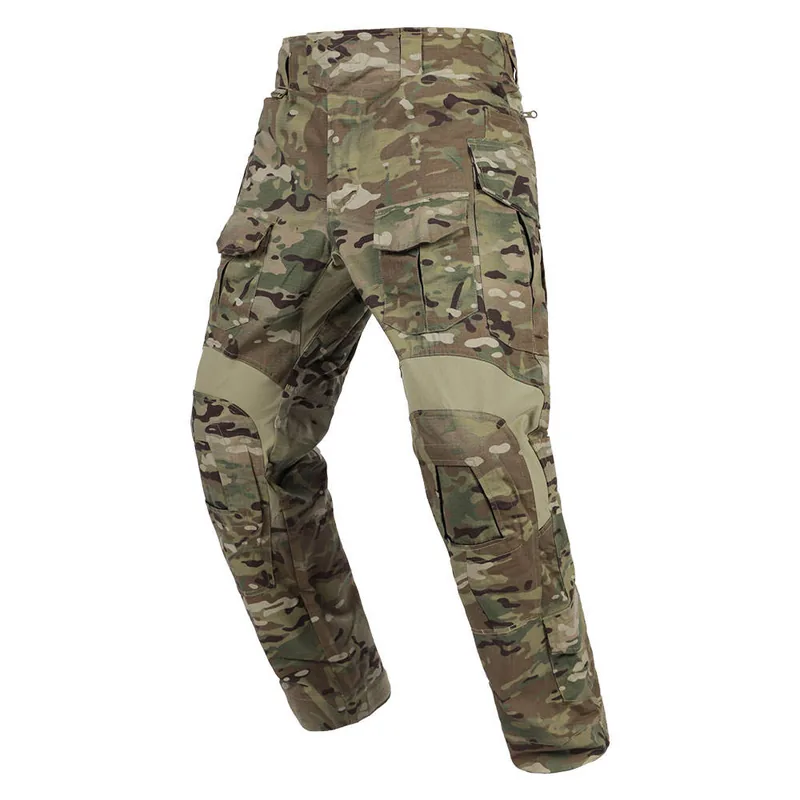
Fatigue vs BDU vs Tactical
| Fatigues | BDU | Modern Tactical | |
|---|---|---|---|
| Origin | Work clothes | Uniform standard | Civilian fieldwear |
| Cut | Relaxed | Relaxed | Articulated |
| Fabric | Ripstop | Ripstop NYCO | NYCO, softshell |
| Use | Heritage | Classic | Modern |
What to Check
The pattern decision matters first: olive drab (the original OG-107 look), woodland (the 1981-2005 BDU standard) and desert/DCU (the GWOT era) are the three heritage options, with repro buyers strongly split by which era they served in or collect. On construction, verify the cargo flaps close flat — cheap versions pucker and gap — and that the pocket corners are bar-tacked rather than single-stitched. Fabric weight separates authentic repros (7 oz and up) from costume-grade versions (5-6 oz): hold the fabric to the light — a genuine ripstop grid should be visible. For wholesale, request a wash-test sample: NYCO blends shrink less than 100% cotton and hold color through industrial washing.
Wholesale Notes
Fatigues are the heritage entry — buyers who want the classic, not the modern cut. Stock olive and woodland in the classic relaxed fit. Our TC50/50 camouflage combat pants cover the modern ripstop build, while the casual tactical BDU cargo pants carry the classic fatigue pocket layout in black. Both ship from the same production line.
The Bottom Line
Army fatigue pants are the heritage cut, cargo pockets, durable fabric — the original tactical pant. Stock the classics for heritage buyers, modern builds for the rest. For the full camo family, see our camo pants guide.
The BDU reference traces the uniform lineage these pants come from.
FAQ
What is Army Fatigue Pants?
Army fatigue pants are the classic military work trousers — the WWII-era "fatigues" that became the standard soldier workwear through Korea and Vietnam. The defining features are a relaxed straight cut, four cargo pockets with flap closures, drawstring or tab cuffs, and a durable cotton or 50/50 NYCO fabric in olive drab, woodland or desert camouflage. Modern reproductions keep the vintage cut while upgrading the fabric to ripstop.'
What should I look for in Army Fatigue Pants?
Check four things. Fabric: at least 7 oz cotton or 50/50 NYCO ripstop — lightweight versions under 6 oz wear through at the knees. Pockets: flap or button closures that lie flat, with bar-tack reinforcement at the corners. Stitching: double rows at the crotch, seat and pocket stress points. Cut: a true relaxed fatigue fit runs straight through the thigh — modern slim interpretations are cut differently and buyers who want the vintage silhouette should size accordingly.
What is the MOQ and lead time for wholesale orders?
Factory-direct MOQ is typically 200-500 pieces depending on model and customization — stock options start lower. Samples ship in 10-14 days; bulk production takes 30-45 days. Custom colors, logos and OEM designs are available.
Can I customize Army Fatigue Pants with my brand?
Yes — full OEM/ODM: custom materials, colors, features, logo and packaging. Send your specification for a quote — sample first, then bulk.
Ask Us About Fatigue Pant Programs
Tell us the build you have in mind — fabric weight, pocket layout, colorways — and we will come back with MOQ, sample timing and factory-direct pricing. Start the conversation.