Tactical Rucksack vs Backpack: What Is the Difference?
Rucksack and backpack are often used interchangeably - but they are not the same. Learn the real differences and which one fits your mission.
Rucksack vs Backpack: Same Thing?
Walk into any tactical gear store and you will hear both words used for the same product. "Tactical rucksack" and "tactical backpack" are often treated as synonyms - but there are real differences in origin, design, and best use cases.
Understanding them helps you pick the right gear for your mission, and if you are sourcing for a brand, it helps you choose products your customers actually want.
Where the Word "Rucksack" Comes From
The word rucksack comes from German: "rucken" (back) and "sack" (bag). It entered English through military use, particularly during and after the World Wars. A rucksack traditionally means a large, rugged backpack designed for extended field carry - the kind soldiers and mountaineers use.
"Backpack" is the broader, more modern term that covers everything from school bags to expedition packs.
Key Differences at a Glance
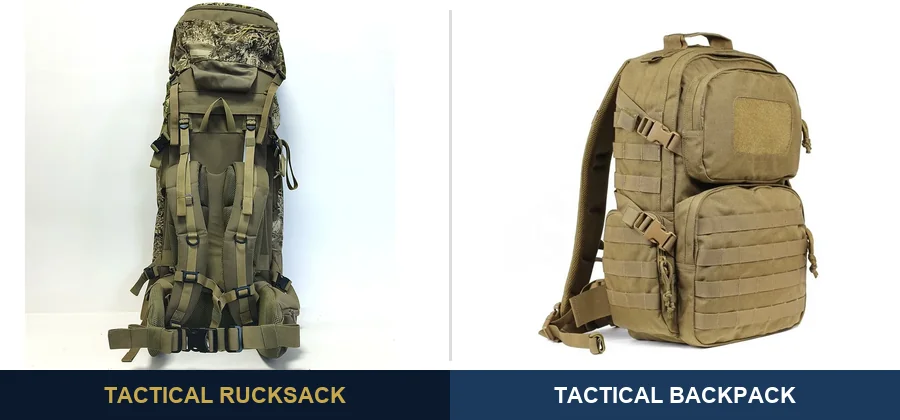
1. Size and Capacity
The most practical difference is capacity.
Tactical rucksacks are built for long-duration operations. You will see 45L, 60L, 80L, and even 100L+ models. They are designed to carry food, shelter, ammunition, and gear for days.
Tactical backpacks typically range from 10L to 40L. They handle everyday carry, urban commuting, range days, and short trips.
Rule of thumb: More than 40L of capacity for field use means you are shopping for a rucksack. Popular examples include the 45L MOLLE System Rucksack - a classic field-ready size.
2. Frame Systems
This is where rucksacks separate themselves from ordinary backpacks.
Internal frame rucksacks: A rigid frame inside the pack transfers weight to the hips through a proper hip belt. Ideal for heavy loads over long distances.
External frame rucksacks: The classic military design - a metal frame outside the pack that holds heavy, bulky loads and keeps them off your back.
Frameless backpacks: Most everyday tactical backpacks have no frame. They are lighter and more flexible but cannot comfortably carry heavy loads.
If you are carrying 20kg+, you need a framed rucksack.
3. Construction and Load-Bearing
Military-grade rucksacks use heavier materials and stronger stitching because they carry serious weight:
A true rucksack is built like equipment, not luggage. This is why brands serving military users still call their large packs "rucksacks" - the word signals rugged construction.
4. MOLLE and Modularity
Both use MOLLE webbing, but rucksacks typically offer more of it.
A large rucksack gives you a full platform: attach pouches, sleeping bags, bedrolls, and utility cases across the exterior.
Modularity is where the rucksack wins decisively — the external MOLLE area multiplies capacity without a bigger bag, and the loadout adapts per trip. A backpack's internal organization is fixed at purchase; a rucksack's external configuration changes in minutes. Buyers who carry variable loads (camping one week, range the next) choose the rucksack for this reason.or. A tactical backpack may have MOLLE on the front panel only, keeping the profile slim for urban use.
5. Use Cases Compared
Which Should You Buy?
Browse examples of both styles in our catalog: the 66L Travel Hiking Mountaineering Rucksack for heavy field carry, and the 25L 3D MOLLE Tactical Backpack for everyday use.
Choose a tactical rucksack if:
Choose a tactical backpack if:
Sourcing Rucksacks for Your Brand
If you are a distributor or brand owner, rucksacks are a distinct product line with their own customers. Key specs to specify when sourcing:
For a full range of tactical rucksacks with factory-direct pricing and OEM customization, browse our tactical rucksack collection.
The Bottom Line
Rucksack and backpack are not quite the same. A rucksack is a heavy-duty, large-capacity, load-bearing pack built for field use; a backpack is the broader category that includes lighter everyday carriers. Match the tool to the mission - and if you are sourcing, know which segment your customers belong to before you order.